For one clear issue
Mark the rooms or viewpoints that matter most. A compact starting point for a household or a single complaint.
Start with five or ten simple QR tiles. Place them where an issue affects you, then use your phone to add dated photos and observations to the right location.
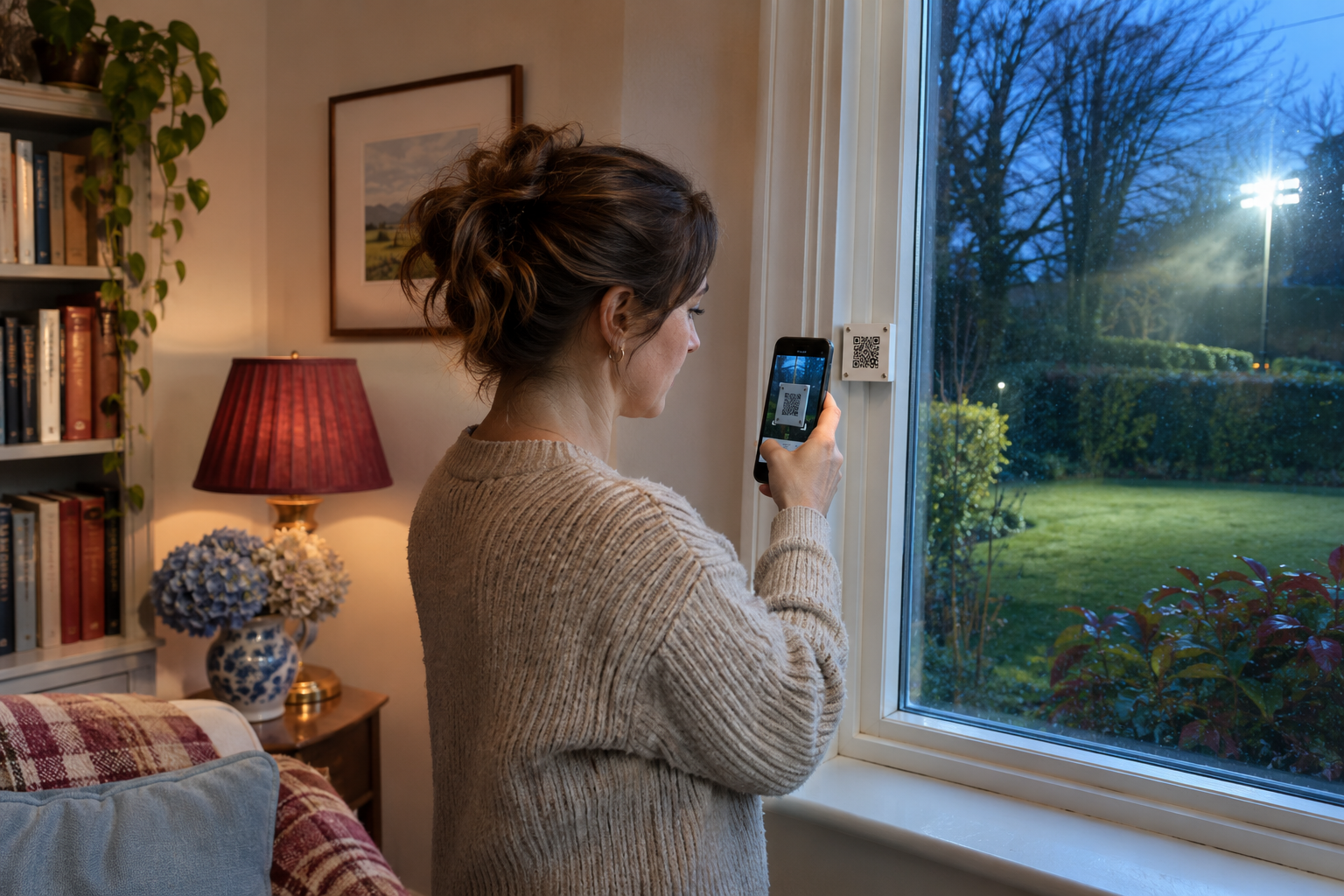
Each tile points to a location in your case record. You can keep separate rooms, windows, boundaries or viewpoints organised as the issue changes over days or weeks.
Mark the rooms or viewpoints that matter most. A compact starting point for a household or a single complaint.
Cover more rooms, boundaries or community viewpoints when an issue affects several places.
Scan, add a dated photo and note what happened. We help organise the observations into a timeline you can share.
Tell us what is happening, where you notice it and whether a planning application or site is involved.
Put a tile at each agreed location. Scan it when you want to add an observation, photo or note.
Bring the dated observations together in a clear summary. If a calibrated measurement is needed, we scope that separately.
If a proposal may affect your home or community, tiles can help organise what you observe at the places that matter: a bedroom window, garden, boundary or shared route.
For a proposal-specific review, Nuisance.ie already offers a source-linked Planning Nuisance Snapshot. It identifies likely nuisance pathways and evidence gaps from public planning and environmental sources.
See planning supportSome questions can be documented with a careful timeline. Others need calibrated equipment, a defined method or a qualified measurement partner. We scope the right approach for the specific issue.
That may include outdoor acoustics, light intrusion, vibration, moisture or water movement. Connected sensors are considered only when the use case and equipment are clear.
Ask what should be measuredWe will tell you whether a tile record is a sensible first step or whether specialist measurement is needed.
Include your location, the issue and any planning reference. We’ll reply with a practical next step.